Random Story: A Playful Display Font for Small Business Branding That Stands Out
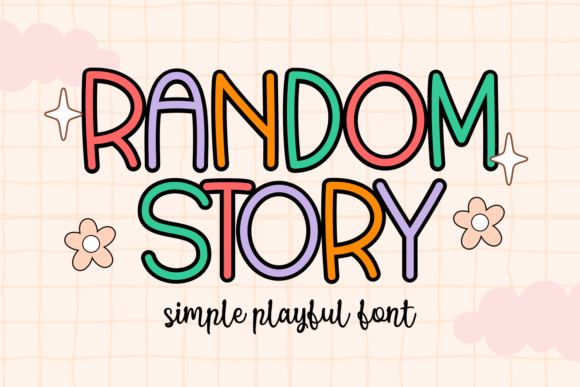
As a small business owner, every piece of customer-facing material you create either builds trust or creates confusion. The fonts you choose play a bigger role in that equation than most entrepreneurs realize. Random Story is a straightforward display font that brings a lighthearted, approachable energy to your projects without sacrificing clarity. It belongs to the Display category of fonts, meaning it is designed to grab attention in headings, logos, and short text blocks rather than long paragraphs. For a boutique owner, handmade seller, or café founder, this typeface offers a way to inject personality into branding while keeping your message easy to read.
What makes Random Story particularly useful in a business context is its balance between fun and legibility. Many decorative fonts sacrifice readability for flair, but this one keeps each letterform clear enough to work on product labels, social media graphics, and printed signage. Whether you are designing a poster for a seasonal sale or a greeting card to include with every online order, Random Story helps your text stand out in a way that feels inviting rather than overwhelming.
How Random Story Adds Personality to Posters and Promotional Materials
Posters remain one of the most effective offline marketing tools for small shops, farmers markets, and local events. A poster needs to communicate a message in seconds, and the typeface you choose determines whether someone stops to read or walks past. Random Story is a straightforward display font that excels in this setting because its friendly character draws the eye without requiring decorative extras. When you use it for event announcements, sale signs, or new product launches, the text becomes the visual hook.
For a bakery promoting a weekend special, Random Story can transform a simple chalkboard sign or printed flyer into something that feels handcrafted and warm. The same holds true for a yoga studio advertising a workshop or a children’s boutique announcing a seasonal collection. Because the font sits squarely in the Display category, it performs best when sized generously — think headlines, subheadings, and call-to-action phrases rather than body copy. Pair it with a neutral background, and your poster immediately communicates approachability and intention.
When I redesigned my own shop’s window posters using Random Story, I noticed that people stopped to read them more often. The font made the message feel less corporate and more like a note from a neighbor. That shift in perception matters when you are trying to build a loyal local following.
Using Random Story for Greeting Cards and Customer Touchpoints
Greeting cards are a surprisingly high-impact touchpoint for small businesses. Whether you include a thank-you card in every shipment, sell your own line of greeting cards, or use them as promotional giveaways, the typography you choose sets the emotional tone. Random Story is a straightforward display font that adds warmth to sentiments without feeling overly scripted or formal. It works beautifully for short messages like “Thank You,” “Happy Holidays,” or “You’re the Best.”
If you run an online shop, a handwritten note inside each package is a powerful retention tool. Using Random Story on a pre-printed card gives you a consistent brand voice that aligns with your logo and packaging. The font’s playful quality makes it especially suitable for brands that sell gifts, home decor, baby products, or artisanal goods. Customers who receive a card printed with a thoughtful, well-designed typeface perceive your business as detail-oriented and trustworthy.
Independent stationery sellers can also use Random Story as a headline font on their greeting card designs. Because it is a Display typeface, it works best when paired with a simpler sans serif font for the interior message or product descriptions. That combination keeps the card visually balanced while letting the headline carry the personality.
Making Your Product Labels Memorable with the Random Story Display Font
Product labels are often the first physical interaction a customer has with your brand. A label needs to communicate product name, key details, and brand personality all at once. Random Story is a straightforward display font that works well as the primary text on labels for candles, soaps, jams, spices, skincare products, and small-batch foods. Its clear letterforms ensure that the product name is readable at a glance, even on small jars or tubes.
For a handmade candle company, using Random Story on the front label communicates a sense of craft and individuality. You can set the scent name or collection title in this font while using a clean serif font or sans serif font for ingredients and instructions on the back. This layered approach keeps the label organized and professional without losing the playful spirit that makes your brand unique.
One mistake I see often in small product lines is using too many decorative fonts on a single label. Stick with Random Story as your hero typeface and pair it with one neutral companion. That restraint makes your packaging look considered and high-quality, which directly supports the price point you want to command.
Pairing Random Story with Clean Sans Serif Fonts for Balanced Branding
No single font should carry your entire brand identity. The most professional-looking small businesses use a system of two or three typefaces that complement each other. Random Story is a straightforward display font that serves as your personality-driven headline option. To give your brand a solid foundation, pair it with a clean sans serif font for body text, product descriptions, website copy, and email newsletters.
A common pairing strategy is to use Random Story for your logo and all primary headings, then switch to a neutral sans serif font like a simple geometric or humanist style for everything else. This gives your brand a distinct voice while keeping long-form content readable. The contrast between the playful display face and the understated body face creates visual hierarchy, which helps customers navigate your materials intuitively.
If your brand leans more traditional, you can pair Random Story with a readable serif font for a vintage or editorial feel. The key is to test combinations on real materials — a business card, a product label, a website mockup — before committing. Many small business owners fall in love with a premium font but never test it in context. Take the time to print a sample label or create a social media graphic so you can see how the pairing behaves at different sizes.
Testing Random Story Across Business Materials Before Full Rollout
Before you adopt Random Story as part of your brand identity, test it across the materials your customers actually see. This means creating mockups of your logo, business cards, product labels, packaging, website banners, Instagram posts, Pinterest graphics, and any digital ads you run. Random Story is a straightforward display font that performs well in many settings, but every business has unique constraints — small label sizes, mobile screen layouts, or printed surfaces that may affect legibility.
Print a sample label at the size you plan to use and hold it next to competing products on a shelf. Check how the font reads on a smartphone screen when scaled down for a social media thumbnail. If you use the font on a menu, ask someone who has never seen it before to read it from a distance. These simple tests reveal whether the typeface works for your specific audience.
I recommend creating a one-page brand style guide that specifies exactly when and how to use Random Story. Include rules about minimum size, color usage, and spacing. This ensures consistency whether you are designing materials yourself or working with a freelance designer. Consistency is what makes a small business look professional and recognizable over time.
Commercial Licensing Considerations for Random Story in Product Packaging
Before you print Random Story on product labels, packaging, or merchandise, verify the commercial font licensing terms. Many fonts are sold with different licenses for personal use, desktop use, web use, and commercial use. If you plan to use the font on physical products that you sell, on digital templates, or in client-facing work, you typically need a license that covers commercial applications.
For a Display font like Random Story, commercial licensing usually allows you to embed the typeface in logos, print it on packaging, and use it in marketing materials. However, if you intend to sell digital products that include the font — such as social media templates, printable planners, or website themes — you may need an extended license. Always read the license agreement or contact the foundry directly if you are unsure.
Investing in proper licensing protects your business from legal issues and supports the type designers who create the tools you use. When you budget for a premium font, think of it as a long-term brand asset that pays for itself every time a customer recognizes your logo or shares your post.
Random Story offers small business owners a straightforward, fun, and practical way to make their brand materials stand out without overcomplicating the design. By using it thoughtfully across posters, greeting cards, product labels, and digital graphics — and pairing it with a clean companion typeface — you create a consistent visual identity that builds trust and recognition. Test it on your real materials, respect the licensing, and let your brand’s personality shine through every piece of text your customers see.