Yuftah: A Clear and Bold Display Font for Islamic Branding Projects
I opened a blank brand board last week for a boutique identity project—a small studio that creates handcrafted gifts inspired by Islamic art and calligraphy. The client wanted something that felt both contemporary and rooted in tradition. I tested half a dozen display fonts on a rough logo draft before landing on Yuftah. Within minutes, I knew this was the one. The clarity and weight of this font gave the mark a quiet authority, and the letters held their shape beautifully at larger sizes. I wound up building the entire brand system around it.
Testing Yuftah on a Logo Concept for an Islamic Boutique
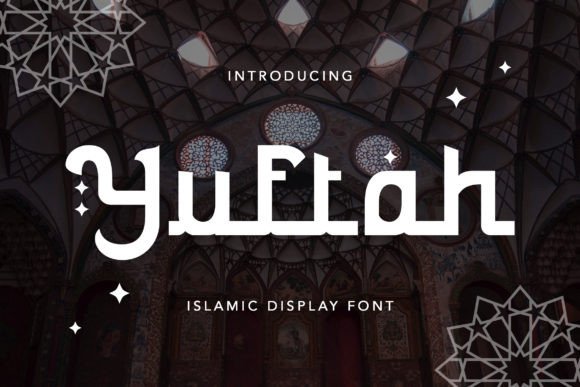
Yuftah is a clear and bold font designed to enhance the beauty of Islamic-themed projects, and that promise holds up the moment you place it on a logo canvas. I sketched a simple wordmark for the studio name using Yuftah at 96 point. The strokes felt generous without being heavy—each character sits with intention. The distinctive style comes through in the letterforms: clean terminals, balanced proportions, and a readable structure that doesn’t sacrifice personality. As a display font, Yuftah gives a logo a grounded, elegant presence. I compared it side by side with a few other fonts I keep in my commercial library, and Yuftah stood out because it didn’t try too hard. It just worked.
Yuftah for Wedding Invitations and Elegant Branding
After the logo, I moved to a mockup for a wedding invitation suite. Islamic wedding stationery often calls for a font that feels celebratory yet refined. Yuftah handled the couple’s names and the ceremony details with ease. The bold weight added warmth to the header, while the clear readability meant guests could scan the date, venue, and time without squinting. That balance is harder to find than most designers expect. Many display fonts lean either decorative or sterile—Yuftah finds a middle ground that feels intentional. For elegant branding work like invitation sets, save-the-date cards, or event programs, this font brings a sense of occasion without overwhelming the layout.
How Yuftah Performs as a Display Font in Brand Identity
Building a full brand identity requires a font that can hold its own across multiple touchpoints. Yuftah is labeled as a display font, and that classification is accurate. It shines in headlines, logos, short phrases, and accent typography. I placed it on a website header mockup for the same studio, and the homepage hero section felt grounded and welcoming. The font’s bold clarity creates a strong visual hierarchy—visitors glance at the header and immediately understand the brand’s tone. For print assets like business cards, the letters remained crisp even at smaller sizes, though I would not recommend it for long body copy. That is not its job. Pair it with a clean sans serif or a neutral serif for paragraphs, and let Yuftah do the heavy lifting on titles and key messaging.
Using Yuftah for Packaging Design and Product Labels
Packaging mockups reveal a lot about a font’s real-world utility. I tested Yuftah on a product label for a small skincare line inspired by traditional ingredients. The brand name at the top of the label read clearly from across a table, and the font’s bold weight gave the packaging a premium feel. For handmade shops, bakery packaging, or gift tags, Yuftah adds a layer of polish that signals quality. The font’s structure holds up well on curved surfaces like jars and bottles, which is a practical concern that often goes unnoticed until the label arrives from the printer. If you work with small-batch products or artisan goods, Yuftah is worth testing on your next packaging run.
Yuftah for Social Media Graphics and Web Design
Social media graphics demand fonts that read well on small screens and short attention spans. I used Yuftah for an Instagram post announcing the studio’s launch. The text sat over a soft geometric background, and the font’s bold clarity made the call-to-action impossible to miss. For web design, Yuftah works best as a primary heading typeface. I placed it in a wireframe for the studio’s homepage—above the fold, the brand statement in Yuftah gave the page a strong entry point. The webfont version loaded cleanly and maintained its character across desktop and mobile browsers. If you are designing a website for a creative studio, local restaurant, or cultural project, Yuftah can handle the headline and hero section with confidence.
Font Pairing Suggestions for Yuftah in Editorial and Commercial Design
No font works in isolation, and Yuftah pairs well with several type families depending on the mood you need. For editorial design or brand guides, I matched it with a quiet serif for body text—the contrast between Yuftah’s bold display style and a lighter serif creates a natural rhythm on the page. For more modern branding, a clean sans serif companion keeps the system feeling current. I also tested it with a subtle script font for accent phrases on a poster mockup. The pairing worked because Yuftah has enough visual presence to anchor the layout while the script adds movement. Stick with two typefaces max in a brand system, and let Yuftah take the lead on headlines and logos.
When Yuftah May Not Be the Right Choice for Your Project
Honest reviews mention limitations. Yuftah is not designed for long body text—its bold weight and display orientation make dense paragraphs feel heavy. For formal corporate reports, academic papers, or any project that requires extensive reading, reach for a neutral serif or a humanist sans serif instead. Yuftah also works best in environments where the cultural and aesthetic context aligns with Islamic art and design. If your brand leans toward minimalist Scandinavian or industrial modern, this font may feel out of place. Knowing where a font belongs is just as important as knowing where it shines.
Practical Tips for Testing and Licensing Yuftah in Client Work
Before committing to a font in a client project, always test it in the actual medium. Download Yuftah, place it on a logo draft, a packaging mockup, a business card template, and a social media layout. Look at how it reads on screen and in print. Pay attention to letter spacing at larger sizes and how the font interacts with backgrounds. For commercial use—brand identity, packaging, merchandise, digital products, or print-on-demand—check the font’s licensing terms. Some display fonts restrict usage in templates or products for sale. Make sure your license covers the scope of your project. A quick read of the licensing agreement saves headaches later and keeps your work professional.
Yuftah earned a permanent spot in my commercial font library after this project. It is a clear and bold display font that adds elegance to Islamic-themed branding without sacrificing readability. Whether you are designing a logo for a local shop, packaging for a handmade brand, or a website header for a cultural initiative, Yuftah gives your work a grounded, refined voice. Try it on a concept board and see how it settles into your next project.