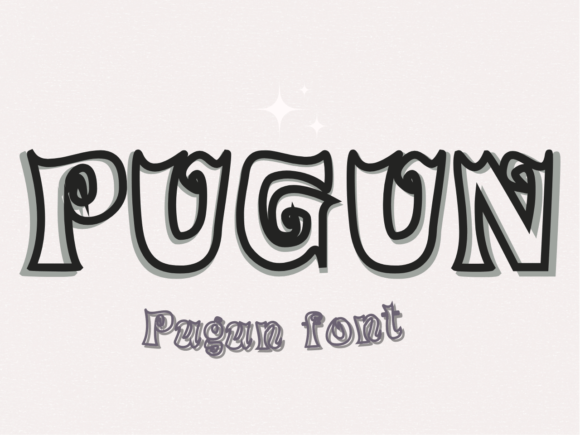
Pugun Font for Creative Projects
There I was, holding a jar of beeswax candles, thinking about how to make the label stand out. I wanted something that felt personal, playful, and just a little bit whimsical. That’s when I discovered Pugun—a fun and quirky display font that brought exactly the right energy to my handmade labels.
Pugun for Candle Labels and Handmade Packaging
Pugun is a fun and quirky display font that adds personality to every project. When I used it on candle labels, the result was immediately noticeable. The rounded edges and slight irregularities gave each label a handcrafted feel, perfect for small-batch, artisanal products. Whether I was labeling soy candles or beeswax tarts, Pugun made the text feel like it had been drawn by hand, not typed on a keyboard.
For packaging, I paired Pugun with a clean sans serif font for the product description. The contrast worked well, giving the design a modern yet approachable look. I found that Pugun works best with short phrases—like "Handmade Soy Candle" or "Farmhouse Vanilla"—so the font doesn’t lose its charm in smaller sizes.
Testing Pugun on Stickers and Product Tags
I also tested Pugun on sticker sheets and product tags. The font held up well even at smaller sizes, making it ideal for custom stickers. On a 2-inch tag, the characters remained legible without looking cramped. I used it for seasonal tags, like "Winter Warmth" or "Spring Bloom," and it added a unique touch that customers noticed.
When cutting with a Cricut or Silhouette, I made sure to check the font’s stroke width and spacing. Pugun has a generous x-height, which helped prevent any issues with the blade getting stuck on tight curves. It also worked well with SVG files, allowing me to use the font in digital designs without worrying about compatibility.
Pugun for Greeting Cards and Wedding Invitations
One of my favorite uses for Pugun was on greeting cards. I designed a set of birthday cards with playful messages like "You're a Star!" and "Happy Birthday, You!" The font added a sense of joy and celebration, making the cards feel more personal. I paired it with a simple serif font for the date and address, creating a balanced design that still felt creative.
For wedding invitations, I used Pugun on the guest names and ceremony details. The font’s quirky style gave the invitation a fresh, modern look without being too informal. I made sure to test it on both digital and printed versions, and it looked great in both formats. It worked especially well for rustic or farmhouse-style weddings, where a bit of character is always welcome.
Using Pugun on Printable Wall Art and Digital Templates
I also experimented with Pugun on printable wall art. I created a set of "Welcome Home" signs with the font, and they became some of my most popular downloads. The font’s playful nature made it perfect for home decor, and users loved the way it added a personal touch to their spaces.
When designing digital templates, I kept the font size large enough to maintain clarity. For printables, I recommended using a high-resolution setting to ensure the font didn’t pixelate. I also included tips on how to pair Pugun with other fonts, suggesting a bold sans serif for headings and a script font for accents.
Pugun for Boutique Tags and Seasonal Products
For boutique tags, I used Pugun on price tags and product descriptions. The font’s charm made it ideal for small businesses that wanted to stand out. I paired it with a minimalist design to keep the focus on the text, and it worked beautifully on both paper and vinyl tags.
I also used Pugun on holiday tags, like "Merry Christmas" or "Happy New Year." The font’s playful style made it perfect for seasonal projects, and it added a sense of fun to every design. I found that it worked well with both warm and cool color schemes, making it versatile for different themes.
Considerations for Commercial Use and Font Pairing
Before selling anything with Pugun, I checked the font’s licensing to make sure it was suitable for commercial use. I also looked at the file formats available, including OTF and TTF, which are widely supported. I made sure to include alternate characters and ligatures in my designs, as they added variety and helped avoid repetition.
When pairing Pugun with other fonts, I leaned toward clean, modern typefaces. A bold sans serif complemented the font’s playfulness, while a soft script font added an elegant touch. I avoided overly decorative fonts that might clash, keeping the overall design cohesive and professional.